

Northern Sonoma Wine Country Guide
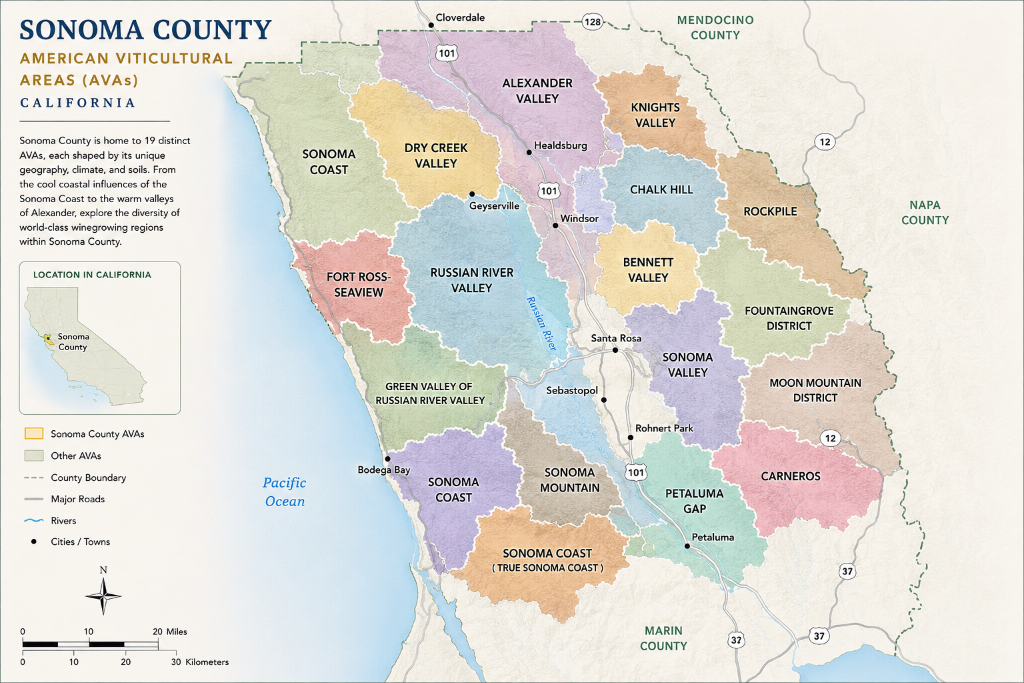
Northern Sonoma is a large umbrella AVA in northern Sonoma County that spans several distinct wine-growing districts, including Alexander Valley, Dry Creek Valley, Russian River Valley, Chalk Hill, and Knights Valley. It is associated with Cabernet Sauvignon, Zinfandel, Chardonnay, Pinot Noir, and Sauvignon Blanc rather than one single style.
At a Glance
Key facts about the Northern Sonoma AVA.
AVAs with similar characteristics and wine styles.
About Northern Sonoma
Northern Sonoma is best understood as a broad regional appellation rather than a compact wine trail. It covers a large portion of northern Sonoma County and overlaps several better-known sub-AVAs, giving producers a legal designation for wines blended from vineyards across this part of the county. For visitors, this means the name on a label may point less to a single landscape and more to a range of climates, elevations, and vineyard sources. The AVA includes warm inland valleys, fog-influenced river corridors, benchlands, and volcanic hillsides. Alexander Valley and Knights Valley are associated with Cabernet Sauvignon, Merlot, and other Bordeaux varieties; Dry Creek Valley is closely tied to Zinfandel and Sauvignon Blanc; Russian River Valley and Chalk Hill add Chardonnay, Pinot Noir, and textured white wines. The range is wider than in many neighboring appellations, so tasting room lineups often move from crisp whites to structured reds within the same visit. Healdsburg is the most practical base for exploring the AVA, with easy access to Dry Creek Valley, Alexander Valley, and Russian River Valley. Geyserville, Windsor, Cloverdale, and Santa Rosa are also useful depending on the itinerary. The scenery changes quickly: vineyard flats along the Russian River, narrow roads through Dry Creek, open ranchland and bench vineyards in Alexander Valley, and wooded or volcanic slopes toward Knights Valley and the Mayacamas foothills. Because Northern Sonoma is so large, visitors should plan by subregion rather than trying to cover the whole AVA in one day. Tasting rooms range from casual family-run properties to appointment-based estate experiences. Reservations are increasingly common, especially on weekends and during harvest. Driving distances can be longer than they appear on a map, and rideshare service becomes less reliable outside town centers.
Why Visit Northern Sonoma?
Click to expand map
Why Northern Sonoma Is One of California’s Most Famous Wine Regions
Signature Characteristics
What makes Northern Sonoma special.
Umbrella AVA Structure
Northern Sonoma overlaps several smaller appellations, so it represents a broad northern Sonoma sourcing area rather than one tightly defined wine style.
Cabernet from Warmer Valleys
Alexander Valley, Knights Valley, and surrounding benchlands contribute Cabernet Sauvignon and Bordeaux-style reds with ripe fruit, moderate to firm tannin, and herbal or savory notes depending on site.
Zinfandel and Sauvignon Blanc in Dry Creek
Dry Creek Valley is one of the AVA’s most identifiable subregions, known for Zinfandel, including older-vine bottlings, and bright Sauvignon Blanc.
Cooler-Climate Chardonnay and Pinot Noir
Fog-influenced areas such as Russian River Valley and parts of Chalk Hill add Chardonnay and Pinot Noir, giving the broader AVA a wider range than Sonoma’s warmer inland districts alone.
Town-and-Country Visiting Pattern
Many visitors use Healdsburg for lodging and dining, then drive into surrounding valleys for estate tastings, vineyard views, and quieter rural roads.
Towns & Areas
Charming towns near the Northern Sonoma wine region.

Healdsburg
An upscale wine country hub featuring world-class wineries, farm-to-table dining, and a lively downtown plaza.

Geyserville
A charming wine country town known for its laid-back atmosphere, acclaimed wineries, and scenic vineyard views.
Cloverdale
Cloverdale is a small, historic town at the northern end of Sonoma County, known for its relaxed pace, agricultural roots, and proximity to some of Sonoma's warmest wine-growing regions.
Compare Nearby AVAs
Northern Sonoma is one of Sonoma County’s most celebrated wine regions. See how it compares to other nearby AVAs to help you choose the perfect destination for your wine country trip.
Northern Sonoma
Famous ForCabernet Sauvignon, Zinfandel, Chardonnay, Pinot Noir, Sauvignon Blanc

Alexander Valley
Famous ForCabernet Sauvignon, Merlot, Zinfandel, Chardonnay, Sauvignon Blanc
Northern Sonoma is a large regional appellation that encompasses several distinct sub-AVAs and offers a wide variety of microclimates for diverse grape production. Alexander Valley is a specific nested region within Northern Sonoma that is primarily recognized for premium Cabernet Sauvignon grown on its warm valley floor and benchlands.
Explore Alexander ValleyNorthern Sonoma
Famous ForCabernet Sauvignon, Zinfandel, Chardonnay, Pinot Noir, Sauvignon Blanc

Dry Creek Valley
Famous ForZinfandel, Sauvignon Blanc, Cabernet Sauvignon
Northern Sonoma serves as an expansive umbrella appellation that encompasses several distinct sub-regions with diverse microclimates and soil profiles. Dry Creek Valley is a specific sub-appellation characterized by its high concentration of old-growth Zinfandel vines and well-drained gravelly soils.
Explore Dry Creek ValleyNorthern Sonoma
Famous ForCabernet Sauvignon, Zinfandel, Chardonnay, Pinot Noir, Sauvignon Blanc

Knights Valley
Famous ForCabernet Sauvignon, Merlot, Sauvignon Blanc, Bordeaux Blends
Northern Sonoma is an expansive overarching appellation that includes multiple sub-regions, allowing for a broad spectrum of varietals grown across diverse terrain. Knights Valley is a secluded, warm-climate region situated at the base of Mount St. Helena, primarily focused on producing structured, mountain-influenced Cabernet Sauvignon.
Explore Knights ValleyNorthern Sonoma
Famous ForCabernet Sauvignon, Zinfandel, Chardonnay, Pinot Noir, Sauvignon Blanc

Calistoga
Famous ForCabernet Sauvignon, Petite Sirah, Zinfandel, Syrah
Northern Sonoma is an expansive viticultural area that encompasses several distinct sub-appellations including Alexander Valley and Dry Creek Valley. Calistoga is located at the northern tip of Napa Valley and is characterized by volcanic soils and significant diurnal temperature shifts.
Explore CalistogaNorthern Sonoma
Famous ForCabernet Sauvignon, Zinfandel, Chardonnay, Pinot Noir, Sauvignon Blanc

St. Helena
Famous ForCabernet Sauvignon, Merlot, Cabernet Franc, Zinfandel
Northern Sonoma is a large viticultural area that includes several distinct sub-regions with varied climates and geological features. St. Helena is a specific Napa Valley appellation known for its warm temperatures and well-drained alluvial soils that primarily support Cabernet Sauvignon.
Explore St. HelenaNorthern Sonoma
Famous ForCabernet Sauvignon, Zinfandel, Chardonnay, Pinot Noir, Sauvignon Blanc

Rutherford
Famous ForCABERNET SAUVIGNON, MERLOT, CABERNET FRANC, SAUVIGNON BLANC
Northern Sonoma functions as a large umbrella appellation encompassing several distinct sub-regions known for diverse microclimates and heritage varietals. Rutherford is a concentrated Napa Valley sub-appellation characterized by its specific soil composition and prestigious Cabernet Sauvignon production.
Explore RutherfordCan’t decide? Explore all Sonoma County AVAs
Discover more wine regions and plan the perfect Sonoma County wine country adventure.
Featured Guides
Curated itineraries and travel guides for Northern Sonoma.

Where to Find Sonoma County's Best Mocktails
Discover Sonoma County's most creative mocktails, from botanical zero-proof cocktails and elegant resort lounges to wineries, rooftop bars, and chef-driven restaurants redefining alcohol-free hospitality.
Travel Guide
Ultimate Sonoma Coast Getaway
Explore the best Sonoma Coast experiences for travelers who want rugged scenery, coastal lodging, cool-climate wines, outdoor adventure, and memorable local dining. This guide highlights the beaches, trails, wineries, restaurants, and places to stay that make the Sonoma Coast one of Northern California's most distinctive wine country escapes.
Multi-Day Itinerary
A Perfect Day at the Sonoma Plaza
Discover the best places around Sonoma Plaza for wine tasting, dining, history, and walkable wine country charm. This guide highlights tasting rooms, restaurants, historic landmarks, and nearby accommodations that make Sonoma Plaza one of California's most accessible and rewarding wine country destinations without needing a car.
Travel Guide
Authentic Sonoma County
Discover authentic Sonoma County experiences rooted in family-owned wineries, boutique producers, historic sites, artisan food makers, and the relaxed agricultural character that defines the region. This guide highlights places that showcase Sonoma County beyond polished wine country, from small-production tasting rooms and heritage farms to local cheese, olive oil, and cultural landmarks.
Travel Guide
Best Luxury Wine Experiences in Sonoma County
Explore Sonoma County's best luxury wine experiences, from acclaimed estates and collector-focused tastings to elegant wineries known for exceptional hospitality, vineyard settings, and limited-production wines. This guide is designed for travelers seeking polished, high-touch wine country experiences with a strong sense of exclusivity and regional prestige.
Travel GuidePlan Your Visit
Everything you need to know before visiting Northern Sonoma.
Best Time to Visit
Spring, Early Summer & Harvest
Transportation
Rental car, private driver, guided wine tours; Uber and Lyft are available in towns but can be limited in rural areas
Reservations
Recommended; required at many appointment-based wineries, especially on weekends and during harvest
Wineries Per Day
3
Where to Stay
Healdsburg is the most convenient base for higher-end hotels, inns, restaurants, and walkable tasting rooms. Geyserville and Cloverdale offer quieter access to Alexander and Dry Creek Valleys, while Windsor and Santa Rosa can be practical for visitors combining Northern Sonoma with Russian River Valley or central Sonoma County. Rural inns and vineyard stays are available but should be booked ahead for spring, harvest, and event weekends.
Northern Sonoma FAQs
Common questions about visiting Northern Sonoma.
What is Northern Sonoma known for and is it worth visiting?
Northern Sonoma is a premier destination for wine enthusiasts, famous for its incredible diversity and world-class Cabernet Sauvignon and Zinfandel. It is absolutely worth visiting because it serves as an umbrella appellation encompassing iconic sub-regions like Alexander Valley, Dry Creek Valley, and parts of Knights Valley. Travelers are drawn here for the high-quality, estate-grown wines and the stunning, rugged landscapes that offer a more intimate and rustic experience than neighboring Napa Valley. With the charming town of Healdsburg as its central hub, visitors can enjoy luxury dining and boutique shopping while being just minutes away from historic vineyards. Whether you are a collector looking for age-worthy reds or a casual traveler seeking scenic views and approachable tasting rooms, Northern Sonoma delivers a quintessential California wine country experience that is both sophisticated and unpretentious.
Which wines and grape varieties are best in Northern Sonoma?
The Northern Sonoma AVA is celebrated for its ability to produce a wide array of premium varietals due to its varied microclimates. Most notably, the region is a powerhouse for Cabernet Sauvignon, particularly from the Alexander Valley and Knights Valley sub-regions, where the warmer climate allows the grapes to develop rich, velvety tannins and dark fruit flavors. It is also world-famous for its old-vine Zinfandel, especially in the Dry Creek Valley, which produces spicy, robust, and fruit-forward profiles. Additionally, travelers should look for crisp Sauvignon Blanc and elegant Bordeaux-style blends. While the southern parts of Sonoma are known for cooler-climate Pinot Noir and Chardonnay, the northern reaches are where bold, structured red wines truly shine, making it a must-visit for fans of hearty and complex wine styles.
How does Northern Sonoma compare to Napa Valley for a wine trip?
Comparing Northern Sonoma to Napa Valley is a common query for travelers, as both regions offer world-class Cabernet Sauvignon. However, Northern Sonoma provides a distinctly different atmosphere. While Napa is often seen as more commercial and formal with higher tasting fees and grander estates, Northern Sonoma maintains a laid-back, agricultural charm. The experience here feels more personal, often allowing guests to meet the winemakers or walk through the vineyards. In terms of geography, Northern Sonoma is more spread out and rugged, offering a sense of discovery. While Napa Valley is concentrated along two main roads, Northern Sonoma winds through rolling hills and river valleys. For travelers seeking a high-end experience without the 'Disney-fied' feel of some larger regions, Northern Sonoma is frequently cited as the preferred alternative for its authenticity and scenic diversity.
Where should I stay when exploring the Northern Sonoma wine region?
The absolute best place to stay when exploring Northern Sonoma is the town of Healdsburg. Located at the intersection of the Russian River, Dry Creek, and Alexander Valleys, Healdsburg is the functional and cultural heart of the region. This vibrant town offers a range of accommodations, from ultra-luxury resorts and modern boutique hotels to charming historic bed and breakfasts. Staying in Healdsburg allows you to walk to world-renowned restaurants, upscale art galleries, and dozens of urban tasting rooms in the evening after a day of exploring the surrounding vineyards. Other nearby options include the smaller town of Cloverdale to the north or Geyserville, which offers a more historic, 'Old West' vineyard vibe. However, for the perfect balance of convenience, luxury, and access to all Northern Sonoma sub-AVAs, Healdsburg remains the top choice for savvy travelers.
What is the best time of year to visit Northern Sonoma wineries?
The best time to visit Northern Sonoma depends on the type of experience you desire. Harvest season, typically from late August through October, is the most exciting time to go. The vineyards are bustling with activity, the air smells of fermenting grapes, and the foliage begins to turn golden and crimson. However, this is also the busiest and most expensive time. For a quieter, more scenic trip, many experts recommend the spring months of March through May. During this time, the weather is mild, the mustard flowers are in full yellow bloom between the vines, and tasting rooms are less crowded, allowing for more personalized attention. Winter offers a cozy, 'cellar season' experience with many wineries hosting special barrel tastings, while summer provides warm, sunny weather perfect for outdoor terrace tastings and vineyard picnics.
How many wineries can you realistically visit in one day in Northern Sonoma?
When planning a day in Northern Sonoma, the golden rule is quality over quantity. Most experienced travelers find that three wineries per day is the ideal pace. This allows you to spend about 90 minutes at each location, leaving ample time for a leisurely lunch in Healdsburg or a picnic among the vines. Because Northern Sonoma is geographically diverse, driving between Alexander Valley and Dry Creek Valley can take 20 to 30 minutes, and you don't want to rush the scenic drive. Attempting four or more stops often leads to 'palate fatigue' and a stressful schedule. To make the most of your day, try to group your visits by valley—for example, spend your morning in Dry Creek and your afternoon in Alexander Valley—to minimize driving time and maximize your relaxation and enjoyment of the wines.
Do I need reservations for wine tastings in Northern Sonoma?
Yes, reservations are highly recommended and often required for most wineries in the Northern Sonoma area. Following the shifts in the travel industry over the last few years, the majority of premium estates have moved away from walk-in bar service toward seated, educational tasting experiences. Booking in advance ensures you have a dedicated table and a host to guide you through the flight. This is especially true for popular wineries in the Dry Creek and Alexander Valleys, which can fill up weeks in advance on weekends. Even if a winery accepts walk-ins, having a reservation often guarantees a better view or a more private setting. If you are planning a trip during the peak harvest season or on a holiday weekend, it is wise to book your top-priority wineries at least four to six weeks in advance.
What is the difference between Northern Sonoma and the Russian River Valley?
The primary difference between Northern Sonoma and the Russian River Valley lies in the climate and the resulting wine styles. Northern Sonoma, which includes the Alexander and Dry Creek Valleys, is generally much warmer because it is further inland and shielded from coastal fog. This heat is perfect for ripening thicker-skinned grapes like Cabernet Sauvignon, Zinfandel, and Syrah, resulting in bold, powerful red wines. In contrast, the Russian River Valley, located just to the south and west, is a 'cool climate' region heavily influenced by maritime fog and the Pacific Ocean. This makes it the premier spot for Pinot Noir and Chardonnay, which require cooler temperatures to maintain their acidity and delicate aromas. Travelers often visit both on the same trip to experience the full spectrum of Sonoma County wine, moving from the 'big reds' of the north to the 'elegant whites and reds' of the south.
Is Northern Sonoma a family-friendly destination for travelers?
Northern Sonoma is surprisingly family-friendly, provided you choose your stops wisely. While some high-end boutique wineries maintain an adults-only policy to preserve a quiet atmosphere, many estates in the Dry Creek and Alexander Valleys offer wide-open outdoor spaces, picnic areas, and even lawn games like cornhole or bocce ball. Wineries such as Francis Ford Coppola are famous for being family-centric, featuring a swimming pool and a movie memorabilia museum. When traveling with children, it is best to look for 'estate' wineries with large grounds rather than small, indoor tasting rooms. Many families enjoy staying in Healdsburg, where the central plaza provides a safe place for kids to run around, and nearby activities like kayaking on the Russian River offer a great break from wine tasting. Always check a winery's policy online before bringing minors along.
What makes the winery experiences in Northern Sonoma unique?
What sets Northern Sonoma apart is the sheer variety of experiences that go beyond a standard tasting flight at a bar. Visitors can participate in rugged ATV tours through hillside vineyards, enjoy elevated food-and-wine pairings curated by estate chefs, or take part in library tastings of aged Zinfandels. Because many of the wineries in this region are family-owned and have been for generations, there is a deep sense of history and storytelling. You might find yourself tasting wine in a converted 19th-century barn or on a modern terrace overlooking miles of valley floor. The region also emphasizes 'sense of place,' with many tours focusing on the specific soil types and geology that make Northern Sonoma unique. This educational yet relaxed approach makes the visitor experience feel authentic and deeply connected to the land.
What are the must-visit sub-AVAs within the Northern Sonoma region?
If you are exploring Northern Sonoma, you must visit its three primary sub-regions: Alexander Valley, Dry Creek Valley, and Knights Valley. Alexander Valley is the largest and most famous for its elegant, supple Cabernet Sauvignons that rival the best in the world. Dry Creek Valley is a compact, beautiful area synonymous with heritage Zinfandel and crisp Sauvignon Blanc; it feels like stepping back in time with its narrow roads and historic vines. Knights Valley is the most remote and rugged, located at the foot of Mount St. Helena, and is prized for its volcanic soils and intense, mountain-grown Bordeaux varietals. Each of these areas offers a different landscape and climate, so visiting all three gives travelers a comprehensive understanding of why Northern Sonoma is considered one of the most versatile wine regions in California.
Is Northern Sonoma suitable for first-time wine country visitors?
Northern Sonoma is an excellent choice for first-time wine country visitors because it is incredibly approachable and easy to navigate. Unlike more intimidating wine regions, the vibe here is welcoming and down-to-earth. The town of Healdsburg serves as a perfect 'base camp,' offering everything a newcomer needs—from easy-to-access tasting rooms to helpful visitor centers. For those who aren't yet sure what kind of wine they like, the diversity of the region allows you to try everything from light whites to heavy reds in a single afternoon. Furthermore, the proximity of the wineries to one another means you won't spend your entire vacation in a car. The staff at Northern Sonoma wineries are known for being educational without being snobbish, making it a comfortable environment for those just beginning their wine journey.
How does Northern Sonoma Cabernet Sauvignon differ from other regions?
Northern Sonoma Cabernet Sauvignon, particularly from the Alexander Valley, is known for being more 'approachable' and 'plush' in its youth compared to the often more tannic and structured Cabernets of Napa Valley. Travelers often describe these wines as having 'velvety' textures with notes of black cherry, chocolate, and a hint of herbal complexity. In Knights Valley, the Cabernets take on a more rugged, 'mountain' character with firmer tannins and mineral notes due to the volcanic soil. Because the region experiences warm days and very cool nights (diurnal shift), the grapes retain a beautiful acidity that keeps the wine balanced. This makes Northern Sonoma Cabernets excellent for food pairing. For the traveler, this means you can enjoy a world-class bottle at a vineyard lunch that feels luxurious but doesn't require decades of aging to be enjoyable.
Can I visit Northern Sonoma on a day trip from San Francisco?
While it is possible to visit Northern Sonoma on a day trip from San Francisco, it makes for a very long day. The drive is approximately 75 to 90 miles each way, taking about an hour and forty-five minutes depending on traffic. If you do a day trip, you will likely only have time for two winery appointments and a quick lunch. To truly experience the magic of the region, we highly recommend staying at least one or two nights. This allows you to explore the different valleys at a relaxed pace, enjoy the world-class dining scene in Healdsburg, and perhaps take a morning hike or a bike ride through the vineyards. If you are short on time, focusing on just one sub-region, like Dry Creek Valley, is the best strategy for a successful day trip.
Are wineries in Northern Sonoma more affordable than Napa?
Generally speaking, Northern Sonoma offers a better value than Napa Valley, though it is still a premium destination. Tasting fees in Northern Sonoma typically range from $30 to $60, whereas in Napa, they often start at $50 and can exceed $100 for basic flights. Bottle prices also tend to be slightly more approachable, even for high-scoring, estate-grown wines. However, don't let the lower price point fool you; the quality is world-class. Many of the most famous wineries in California actually source their fruit from Northern Sonoma vineyards. For travelers on a budget, several wineries in the Dry Creek and Alexander Valleys still offer more traditional tasting experiences, and some will waive the tasting fee with a minimum bottle purchase—a practice that is becoming rarer in other high-end California wine regions.
Explore More Regions
View all regionsAdelaida District
The Adelaida District is a high-elevation AVA in northwest Paso Robles defined by its rugged Santa Lucia Range terrain, calcareous limestone soils, and significant maritime influence.
Alisos Canyon
Alisos Canyon is a 5,774-acre AVA in Santa Barbara County, established in 2020. It is defined by its position between the Santa Maria Valley and the Santa Ynez Valley, specializing in concentrated Syrah and Rhone-style wines grown on sandstone and shale soils.

Atlas Peak
Atlas Peak is a high-elevation Napa Valley AVA on the western slopes of the Vaca Range, east of the city of Napa. It is best known for mountain-grown Cabernet Sauvignon from volcanic, well-drained sites above much of the valley fog.
Ballard Canyon
Ballard Canyon is a small, north-south oriented AVA in the Santa Ynez Valley of Santa Barbara County. It is specifically recognized for its focus on Syrah and other Rhône varieties grown in a transitional climate.

Calistoga
Calistoga is Napa Valley’s northernmost AVA, centered on the town of Calistoga and shaped by a warm valley-floor climate with strong nighttime cooling. It is best known for structured Cabernet Sauvignon, ripe Zinfandel, and smaller plantings of Syrah, Petite Sirah, and Charbono.

Carneros
Los Carneros is the cool, bay-influenced AVA at the southern end of Napa and Sonoma, known for Chardonnay, Pinot Noir, and sparkling wine. Fog, wind, and a long growing season give its wines higher acidity and more restrained fruit than much of inland Napa Valley.

Chiles Valley District
Chiles Valley District is a small, rural AVA in the eastern hills of Napa Valley, known mainly for Cabernet Sauvignon, Zinfandel, and other mountain-influenced red wines. Its higher elevation, cooler nights, and relative isolation distinguish it from the warmer, more developed Napa Valley floor.

Coombsville
Coombsville is a cool, maritime-influenced Napa Valley AVA east of the city of Napa, best known for Cabernet Sauvignon and Bordeaux varieties with freshness, structure, and restrained fruit. Its rolling volcanic hills and proximity to San Pablo Bay distinguish it from warmer up-valley Cabernet districts.

Curated by Wine Country Experts
Our guides are written by local wine experts and updated regularly to ensure you get the most accurate and helpful information for your wine country adventure.
Guest Reviews
We analyze thousands of verified guest reviews to understand real experiences and consistent satisfaction.
Booking Popularity
We evaluate booking and reservation trends to spot the most sought-after places and experiences.
Regional Significance
We prioritize businesses that represent the unique character, heritage, and communities of Sonoma County.
Wine Quality
Our team looks for outstanding wine programs, high-quality offerings, and recognition from trusted industry sources.
Local Expert Recommendations
Our local experts personally visit and vet each recommendation to ensure it meets our standards.
Trusted. Local. Unbiased.
We do not accept payment from businesses for placement. Our recommendations are independent and always focused on helping you have exceptional wine country experiences.